

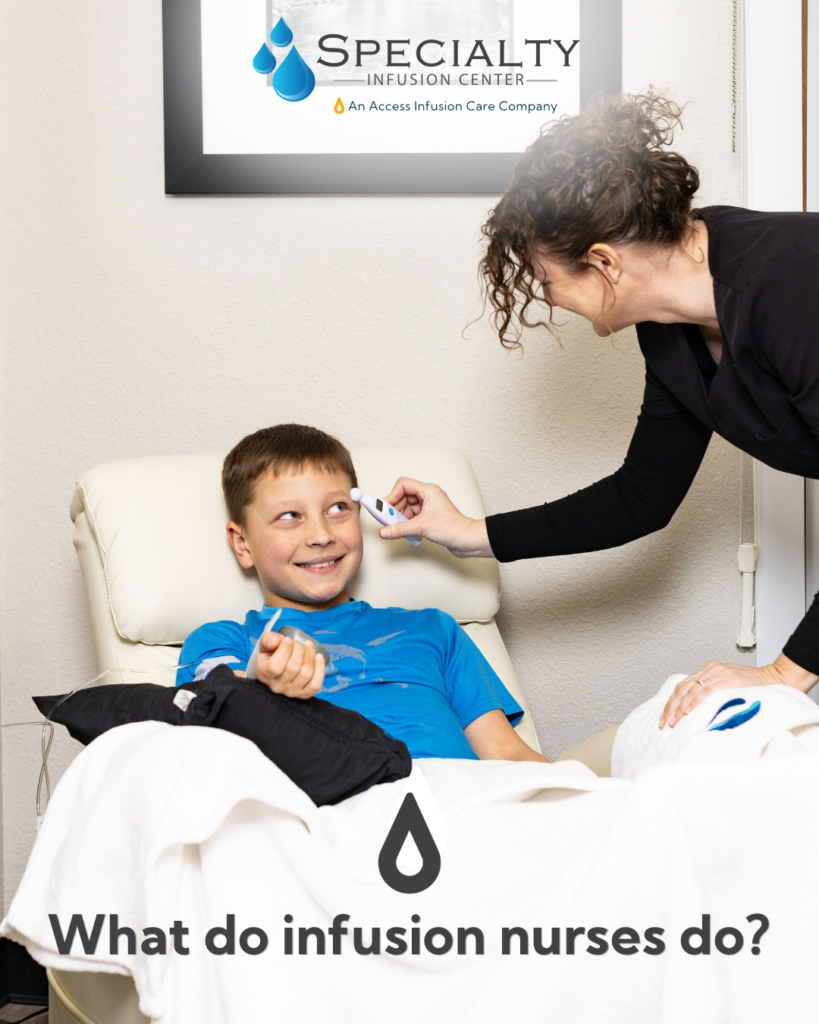
What Does an Infusion Nurse Do? Roles, Training & Patient Benefits
If you or a loved one has been referred to an infusion clinic, you may be wondering who will be by your side. Meet the infusion nurse, a highly trained specialist whose entire focus is your comfort, safety, and care.
IN THIS ARTICLE
- What is an infusion nurse?
- Core responsibilities of an infusion nurse
- Patient benefits of specialized infusion care
- Frequently asked questions
Infusion clinics provide life-changing medications that cannot be taken by mouth, including biologics, antibiotics, chemotherapy agents, and immune therapies. At the center of every safe, successful infusion visit is a registered nurse with specialized training in intravenous (IV) therapy, known as an infusion nurse. Understanding their role helps patients feel informed, confident, and cared for.
What Is an Infusion Nurse?
An infusion nurse is a registered nurse (RN) who specializes in the administration and management of IV-delivered medications and fluids. Unlike general-floor nurses who manage a wide range of bedside tasks, infusion nurses dedicate their practice entirely to intravenous therapy in focused clinical settings such as infusion clinics, outpatient infusion centers, and home infusion programs.
Their patients include individuals living with autoimmune conditions, cancer, infections requiring long-term IV antibiotics, dehydration, and neurological disorders, many of whom receive regular, ongoing treatments over months or years.
Core Responsibilities of an Infusion Nurse at an Infusion Clinic
Infusion nurses perform a comprehensive set of clinical duties before, during, and after each patient’s infusion appointment. Here is what you can expect from your infusion nurse at every visit:
Pre-infusion assessment
Reviews your health history, current vitals, recent lab results, and active medications to confirm you are ready for treatment.
IV access & port management
Skillfully places peripheral IV lines or accesses implanted ports and central venous catheters with sterile technique.
Medication preparation & administration
Verifies and prepares infusion medications, then delivers the correct drug at the prescribed rate, dose, and duration.
Continuous monitoring
Observes your vital signs and clinical status throughout the infusion, ready to respond immediately to any adverse reaction.
Patient education
Explains your treatment in plain language, answers questions, and prepares you with clear instructions for after your infusion.
Care team coordination
Communicates directly with your physician, specialty pharmacist, and insurance team to keep your care seamless.
Patient Benefits of Specialized Infusion Nursing Care
Choosing an infusion clinic staffed by infusion nurses, rather than receiving IV therapy in a general hospital or emergency setting, offers measurable advantages for patients.
Fewer IV complications. Specialized vascular access skills reduce rates of infiltration, phlebitis, and catheter-associated infections compared to non-specialist settings.
Faster identification of adverse reactions. Trained infusion nurses recognize early warning signs of allergic and infusion-related reactions and intervene before they escalate.
A calmer, less clinical environment. Infusion clinics are purpose-built for patient comfort; infusion nurses create a reassuring experience for patients who may feel anxious or unwell.
Undivided, personalized attention. Unlike a busy hospital floor, the infusion clinic environment allows nurses to maintain close, continuous observation of each patient throughout treatment.
Continuity across visits. Regular patients often see the same infusion nurse over many months, building a relationship that improves safety, communication, and trust.
Improved treatment adherence and outcomes. Research links specialist infusion care to higher adherence rates, fewer hospital readmissions, and better management of chronic conditions.
Frequently Asked Questions About Infusion Nurses
What does an infusion nurse do?
An infusion nurse administers intravenous medications, monitors patients for reactions throughout the infusion, places IV lines and manages ports, educates patients about their treatment, and coordinates care with the broader clinical team.
Is an infusion clinic different from a hospital infusion unit?
Yes. An outpatient infusion clinic is a dedicated facility where patients receive scheduled IV treatments in a comfortable, focused setting. Infusion clinic nurses specialize exclusively in infusion therapy, often resulting in better patient experiences and fewer complications.
What conditions are treated at an infusion clinic?
Infusion clinics treat a wide range of conditions, including rheumatoid arthritis, Crohn’s disease, multiple sclerosis, cancer, chronic infections requiring IV antibiotics, immune deficiencies, and dehydration, among others.
Medical Disclaimer: This article is intended for general patient education and does not constitute medical advice. Please consult your physician or care team with any questions about your specific treatment plan.